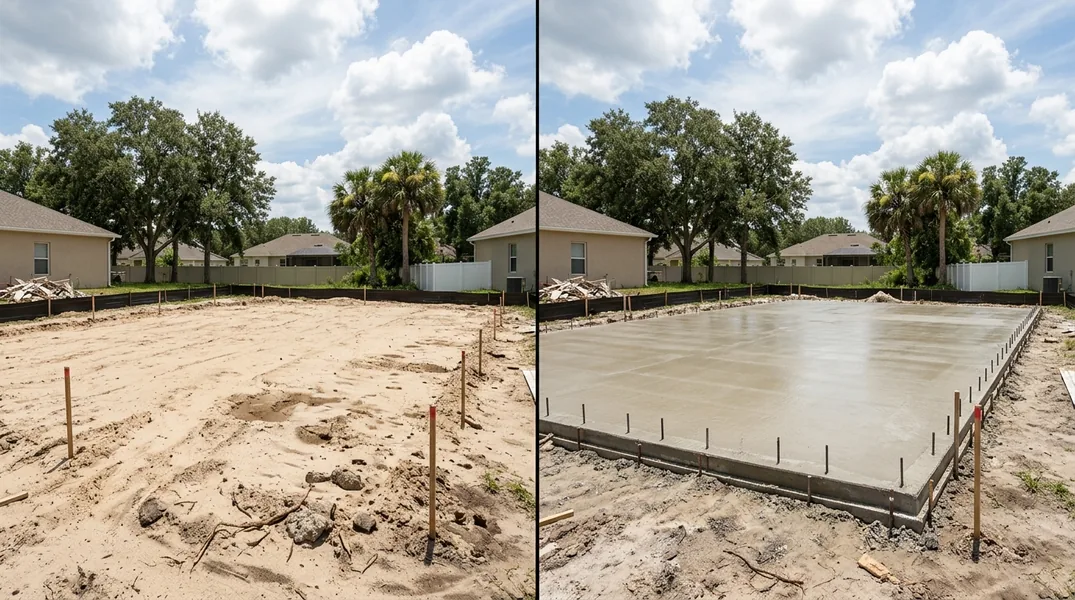
Understanding New Construction Concrete Slabs in Florida
Buying a new home in Orlando is exciting, but the concrete foundation beneath your house deserves serious attention before you sign closing documents. A new construction concrete slab is not just a pad of cement; it's the structural foundation that supports your entire home and can affect everything from basement moisture to foundation cracks for decades to come. Many homebuyers overlook this critical inspection because they assume builders follow strict standards, but the reality is more nuanced.
Florida's unique climate, with its high water table, seasonal flooding risks, and intense heat cycles, puts extra stress on concrete slabs. Unlike northern states where frost heave is a primary concern, Orlando homeowners face subsidence, expansive soils, and moisture intrusion as the main culprits behind foundation problems. A properly installed slab should have adequate drainage, proper thickness, reinforcement, and post-tensioning where needed. If your builder cuts corners during the slab phase, you could face expensive repairs years after closing, making a thorough pre-closing inspection absolutely essential.
What to Inspect Before Closing: A Homebuyer's Checklist
Before you hand over your keys, you need a detailed walkthrough of the concrete slab itself. Start by examining the surface for visible cracks, especially cracks wider than one-eighth inch or any that run diagonally across the slab. While hairline cracks are common and not always a concern, wider or multiplying cracks can indicate settling, poor concrete mix, or inadequate curing time. Look for spalling, which is when the surface flakes or peels away, and check for soft spots by walking across the entire slab and noting any areas that feel spongy or uneven.
Next, inspect the perimeter where the slab meets the foundation walls. Water should not be pooling against the house, and the grade should slope away from the structure at a minimum of five percent to encourage proper drainage. Check that all control joints (the intentional cuts in concrete that allow for expansion and contraction) are present and evenly spaced, typically every four to six feet. Also verify that the slab is level; use a long straightedge or hire a professional inspector to measure any slope or high spots that could cause water pooling or structural stress. Pay special attention to areas around plumbing penetrations, HVAC lines, and electrical conduits, as these are common weak points where moisture can seep through or structural integrity may be compromised.
New Home Foundation Warranty Florida: What's Actually Covered
Florida law requires builders to provide a new home foundation warranty, but understanding exactly what it covers can be confusing. Most builder warranties in Florida cover structural defects for ten years from the date of closing, but they often exclude cosmetic issues like minor cracking, staining, or efflorescence (the white powdery substance that appears on concrete). The warranty typically covers major foundation movement, significant cracking that affects the structural integrity of the home, and water intrusion caused by defects in the slab itself, not by poor grading or drainage issues around the property.
Here's the catch: many warranties require you to report issues within a specific timeframe, often within one year of closing, and the builder has the right to attempt repairs rather than replace the slab. If the builder's repair doesn't resolve the problem, you may have the option to pursue further remedies, but this process can be lengthy and costly. Additionally, some builders include exclusions for damage caused by soil conditions, natural settling, or homeowner maintenance failures. Before closing, request a copy of the specific warranty document and have an attorney review it. Ask your builder directly which concrete-related issues are covered and get their answers in writing. This protects you if problems emerge later and you need to make a claim.
Common Defects in Builder Slabs and Red Flags to Watch For
Experienced inspectors know which defects appear most frequently in new construction slabs across Florida. One common issue is inadequate reinforcement, where builders use insufficient rebar or wire mesh to meet code requirements. This becomes apparent when cracks develop in patterns that suggest the slab is not properly braced to handle structural loads. Another frequent problem is improper concrete curing, especially in Florida's heat. If concrete is poured during peak summer temperatures and not properly protected with moisture barriers or cooling measures, it can cure too quickly and develop internal weaknesses that lead to premature cracking and deterioration.
Poor subgrade preparation is another red flag. The soil beneath the slab must be properly compacted and prepared to uniform density, or the slab will settle unevenly. This is especially critical in Orlando where soil composition varies widely and can include clay, sand, and fill materials from previous development. Additionally, watch for signs that the builder skipped or rushed the moisture barrier installation. A proper vapor barrier under the slab prevents ground moisture from wicking up into the concrete and eventually into your home's structure. If you notice dampness, musty odors, or efflorescence on the slab surface shortly after closing, the moisture barrier may have been installed improperly or omitted entirely. These issues are not always visible until months or years after construction, which is why your pre-closing inspection is so critical.
Hiring a Professional Inspector: Why It Matters Before Closing
Many homebuyers hire a general home inspector, but few specifically engage a structural engineer or concrete specialist to evaluate the slab. This is a significant gap in due diligence. A structural engineer can assess the slab's thickness, reinforcement, and compliance with Florida Building Code standards in ways a general inspector cannot. They can use specialized equipment to measure concrete strength, detect voids, and identify potential issues that won't be obvious to the naked eye. The cost of a professional slab inspection, typically between three hundred and eight hundred dollars depending on the home's size, is a small investment compared to the cost of repairing a defective foundation after closing.
When hiring an inspector, ask specifically about their experience with new construction in Florida and their familiarity with local soil conditions and building codes. Request a detailed written report that documents all findings, measurements, and photographs. If the inspector identifies concerns, ask them to explain the severity and potential long-term implications. Some issues are cosmetic and acceptable; others are structural red flags that should delay closing until the builder addresses them. Don't rely solely on the builder's inspector or the lender's inspector, as they may have incentives to overlook minor issues to keep the deal moving forward. Hiring your own independent professional gives you an objective assessment and documentation you can reference if problems emerge later.
What to Do If You Discover Slab Problems Before Closing
If your inspection reveals defects or concerns, you have several options depending on the severity and your contract terms. First, document everything with photographs and written notes, and provide these findings to your real estate agent and attorney. Request a formal written response from the builder outlining their plan to address each issue. Some builders will agree to repairs before closing, while others may offer a credit or price reduction instead. If the defects are significant and the builder refuses to address them, you may have the right to withdraw from the purchase depending on your contract's contingency clauses, though this is a nuclear option that should only be pursued if the slab is genuinely unsafe or uninhabitable.
In many cases, the builder will agree to minor repairs or will provide documentation that the slab meets code requirements despite cosmetic issues. If you proceed with closing despite identified concerns, ensure that the warranty documentation clearly states what is covered and get written confirmation of any agreed-upon repairs. Some homeowners also choose to budget for Concrete Repair & Resurfacing work after closing to address cosmetic issues or to reinforce the slab with additional sealant or protective coatings. If you're concerned about the slab's condition or want professional guidance before closing, Orlando Concrete Pros can provide expert evaluation and recommendations. Contact us at (689) 400-3387 or request a free estimate to discuss your specific situation.
Looking for a professional concrete contractor in Orlando? Orlando Concrete Pros responds fast for all your concrete needs.
Get a Free QuoteOur services: Concrete Driveways · Concrete Patios · Stamped & Decorative Concrete